Can You Get Pregnant on Your Period?
Short answer: it's unlikely, but it's possible, and it's more possible than most people think. The reason comes down to three things: how long sperm survive, how short some cycles are, and the fact that not all bleeding is actually a period.
Educational content, not medical advice. For personal concerns, please consult your doctor.
Quick Answer: Can You Get Pregnant on Your Period?
Yes, it's possible, though not likely. Three things make it possible:
- Sperm survive up to about 5 days in the body, so sperm from period sex can still be alive days later when you ovulate.[1]
- Short cycles mean ovulation can arrive soon after your period ends, putting the fertile window close to your bleeding days.
- Not all bleeding is a period. Spotting around ovulation can be mistaken for one, which throws off the timing entirely.
This is one of the most common cycle questions out there, and the confusion is understandable. We're often taught that your period is the "safe" time, but the body doesn't run on a fixed schedule. Let's walk through why pregnancy during your period is possible, when the risk is higher, and how to actually know where you stand.
Why It's Possible
To get pregnant, sperm has to be present when an egg is released at ovulation. The trick is that those two events don't have to happen on the same day.
Sperm can survive in fertile conditions for up to about five days.[1] So if you have sex toward the end of your period and you ovulate a few days later, sperm can still be around to meet the egg. The closer your ovulation is to your bleeding, the more this matters.
That's where cycle length comes in. If you have a short cycle, say 21 to 24 days, you ovulate earlier. Ovulation roughly 14 days before your next period can land just a handful of days after your period ends, or even close to its tail end. Combine that with five-day sperm survival and the math gets real.
Where the Fertile Window Sits
Here's the general shape of a cycle and where pregnancy risk concentrates. Remember these are typical patterns, not your exact cycle.
| Cycle stage | What's happening | Pregnancy chance from sex then |
|---|---|---|
| During your period | Bleeding, egg not yet released | Low, but not zero, higher on short cycles |
| Right after your period | Fertile window may be starting | Rising, sperm can survive to ovulation |
| The fertile window and ovulation | Egg released, most fertile days | Highest |
| After ovulation (luteal phase) | Egg no longer available that cycle | Lowest, if ovulation is confirmed |
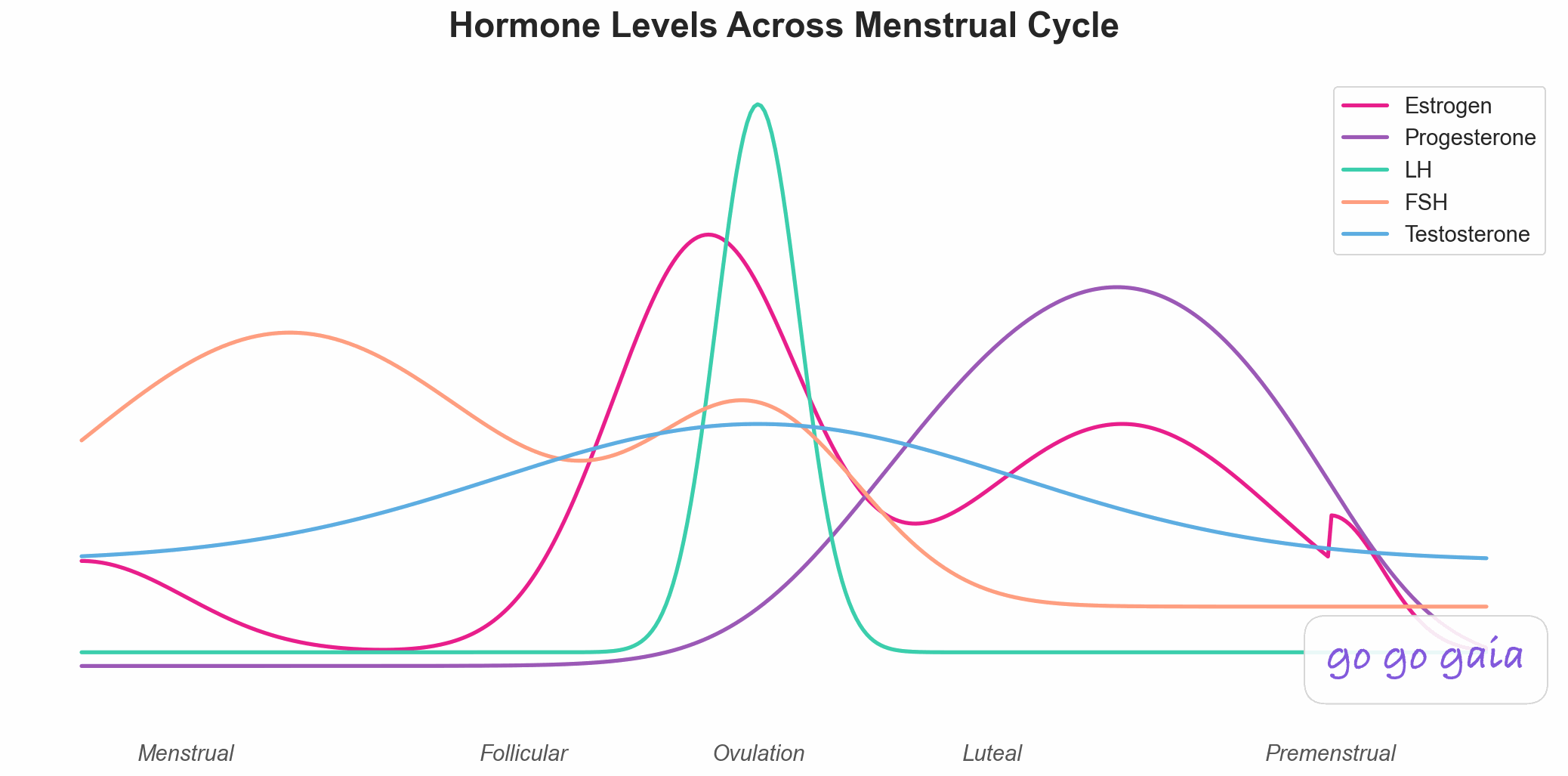
The fertile window sits around ovulation. On short cycles it creeps closer to the period, which is how period sex can lead to pregnancy.
The "Is It Really My Period?" Problem
One more wrinkle: not every bleed is a true period. Ovulation spotting, breakthrough bleeding, and other light bleeds can be mistaken for a period. If you assume you're "on your period" and therefore safe, but that bleeding is actually happening near your fertile window, the assumption falls apart.
This is exactly why guessing from bleeding alone is shaky. The bleed you're seeing might not be the calendar event you think it is.
When the Risk Is Higher vs Lower
Higher chance of pregnancy from period sex if you:
- Have short cycles (around 21 to 24 days)
- Have irregular cycles where ovulation timing is unpredictable
- Have longer periods, so bleeding runs closer to your fertile window
- Aren't sure whether the bleeding is a true period
Lower chance if you have longer, regular cycles where ovulation is well separated from your period. But "lower" is not "none," and you can only know your real timing by tracking it.
If You're Trying to Avoid (or Achieve) Pregnancy
The honest takeaway cuts both ways:
- Avoiding pregnancy? Don't treat your period as a free pass. Casually timing sex around your period is not reliable contraception, because ovulation varies and bleeding can be misread. Formal fertility awareness methods can work, but only when taught properly and followed strictly. Talk to your doctor about a method that fits you. Our birth control guide covers the options.
- Trying to conceive? Period days are not your best shot. Focus on the fertile window, the five days before ovulation plus ovulation day. Learning to spot that window is the whole game. See how to tell if you're ovulating, our comparison of the best ovulation tracker apps, and our pick of the best fertility tracking apps.
The only way to know your timing is to track it
Whether you're trying to avoid or achieve pregnancy, the calendar alone won't tell you when you ovulate. Tracking your cycle, temperature, and LH tests over a few months shows you your real fertile window instead of a textbook guess.
Veya maps your fertile window from your own data, so you know which days actually matter for you.
Find Your Fertile WindowThe Bottom Line
Can you get pregnant on your period? Yes, it's possible, even if it's not the most likely time. Sperm survive for days, short cycles pull ovulation closer to your period, and not every bleed is a true period. If you're trying to avoid pregnancy, don't rely on period timing as protection. If you're trying to conceive, aim for the fertile window instead. Either way, tracking your own cycle is what turns guesswork into something you can actually act on.
Related Reading
Stop guessing which days matter.
Your period isn't a reliable green light or red light. Track a few cycles and you'll know your real fertile window, for whichever goal you have.
Try Veya Free