Why Is My Period Late? (When You're Not Pregnant)
Pregnancy is one reason a period runs late, but it's far from the only one. Stress, illness, travel, exercise, and a handful of hormonal shifts can all push your period back. Here's what's usually going on and how to read your own pattern.
Educational content, not medical advice. For personal concerns, please consult your doctor.
Quick Answer: Why Is My Period Late?
If there's any chance you could be pregnant, a home test from the day of your expected period onward is the first thing to check. Beyond pregnancy, the most common reasons a period runs late are:
- Stress, poor sleep, illness, or travel across time zones
- Big changes in weight or exercise
- Starting, stopping, or switching birth control
- Breastfeeding
- Thyroid issues, PCOS, or perimenopause
And sometimes it's just normal variation. A typical cycle runs about 21 to 35 days, and yours can shift by a few days month to month.[1]
You're staring at the calendar, doing the math again. Your period's a few days late, the test was negative (or you know pregnancy isn't possible), and now you're wondering what's going on. This is one of the most common questions people have about their cycle, and the reassuring part is that a late period usually has a straightforward explanation.
Let's walk through what "late" actually means, the usual reasons behind it, and how to tell your normal variation from a pattern worth watching.
First, What Counts as "Late"?
A period is generally considered late when it hasn't started by the time you'd expect based on your usual cycle length. But "usual" does a lot of work in that sentence, because cycle length varies.
A typical adult cycle runs about 21 to 35 days, measured from the first day of one period to the first day of the next.[1] Your own cycle can drift by a few days in either direction and still be completely normal. So a period that's two or three days behind your average is often just ordinary variation, not a red flag.
If you'd rather not do the math yourself, our period calculator takes your last period date and average cycle length and works out your expected date for you, so you can see exactly how many days late that puts you today.
If you don't know your average cycle length, that's the first thing worth figuring out. It's hard to know what "late" means for you without it. Our guide to period tracking covers how to find your baseline.
Common Non-Pregnancy Reasons a Period Is Late
Most of these work the same way: they delay or skip ovulation, and since your period follows ovulation by roughly two weeks, the whole thing shifts back.
- Stress. High physical or emotional stress affects the brain signals that trigger ovulation. Delay ovulation and you delay your period.
- Poor sleep or a disrupted routine. Shift work and irregular sleep can nudge the same hormone signals off schedule.
- Illness. Even a bad cold or a short illness around the time you'd normally ovulate can push things back a cycle.
- Travel. Crossing time zones and changing your daily rhythm can temporarily affect timing.
- Big changes in weight or exercise. Significant weight loss or gain, or a jump in training intensity, can interrupt ovulation.
- Starting, stopping, or switching birth control. Hormonal methods change your cycle, and it can take a few months to settle after a change. If a hormonal IUD has stopped your periods entirely, "late" doesn't really apply — our guide to tracking your cycle with an IUD and no period covers what's still worth logging.
- Breastfeeding. Nursing hormones can suppress ovulation, so periods are often irregular or absent for a while postpartum.
- Thyroid issues. An under- or over-active thyroid can affect cycle timing.
- PCOS. Irregular or skipped periods are one of the most common signs of polycystic ovary syndrome.
- Perimenopause. In the years before menopause, cycles commonly get longer, shorter, or less predictable.
Here's the cycle these factors are nudging. Ovulation in the first half sets the timing, and your period follows it:
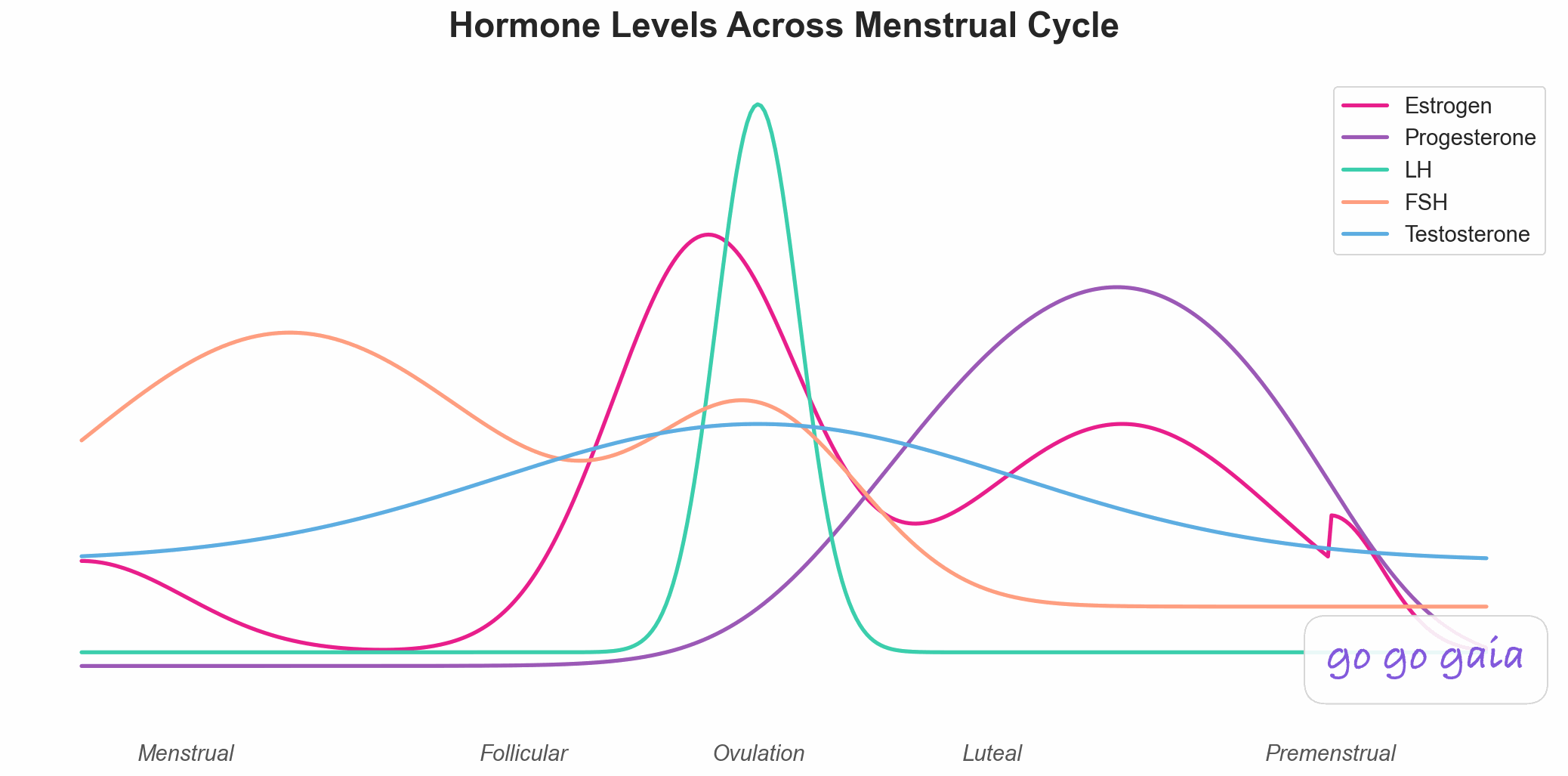
Your period follows ovulation by roughly two weeks. Anything that delays ovulation delays your period too.
Late Period vs Early Pregnancy: The Overlapping Signs
Part of what makes a late period stressful is that the lead-up can feel a lot like early pregnancy. The symptoms overlap because both are driven by the same hormone, progesterone. Here's how they tend to compare.
| Sign | Coming period (PMS) | Early pregnancy |
|---|---|---|
| Cramping | Common, often eases as bleeding starts | Can occur (mild), but no period follows |
| Spotting | Usually leads into a full period | If present, light implantation spotting that stays light |
| Sore breasts | Common, eases once your period arrives | Common, tends to continue and build |
| Nausea | Less typical | More commonly reported |
| How it resolves | Symptoms ease as your period starts | Symptoms continue, test turns positive |
The honest bottom line: symptoms alone can't tell you which one it is, because they look so similar. A test is the only way to confirm pregnancy. If you want the symptom-by-symptom breakdown, see our guide to early pregnancy signs and when to test.
How to Spot Your Own Pattern
One late cycle isn't usually meaningful on its own. The useful information is in the pattern over time. Tracking your cycles helps you see:
- Your real average cycle length so you know what "late" means for you, not for a textbook 28-day cycle.
- How much your cycles naturally vary month to month.
- Whether late or skipped periods are becoming a pattern rather than a one-off.
- What else was going on (stress, travel, illness, a training block) in the cycles that ran late.
That record is exactly what helps a doctor tell ordinary variation from something like PCOS, thyroid issues, or perimenopause. If your cycles are frequently irregular, our comparison of the best period trackers for irregular cycles covers tools built for exactly that.
The pattern is what your doctor wants
A single late period rarely tells you much. A few months of tracked cycles tells you, and your doctor, a lot: your real cycle length, how much it varies, and whether late periods are becoming a trend.
Veya logs your cycles, symptoms, and the lifestyle factors (sleep, stress, training) that nudge your timing, so you can see what's actually going on.
Track Your Next 3 CyclesThe Bottom Line
A late period is common and usually has a clear, non-serious explanation. Rule out pregnancy first if it's possible, then look at the usual suspects: stress, sleep, illness, travel, exercise, weight changes, birth control, or a hormonal shift like PCOS or perimenopause. And remember that a few days of variation is often just your normal. Track a few cycles, watch the pattern rather than the single month, and bring that record to your doctor if late or skipped periods become a trend.
Related Reading
- Am I Pregnant? Early Signs & When to Test
- PCOS: Symptoms, Causes & What Actually Helps
- Perimenopause: Signs, Symptoms & What to Track
- Best Period Tracker App 2026: Clue vs Flo vs Ovia Compared
- Best Period Tracker for Irregular Cycles (2026)
- Period Tracking for Doctor Appointments: What to Log
- Why Is My PMS Different Every Month?
One late month is noise. The pattern is the signal.
Track a few cycles and you'll know your real average, how much you vary, and whether anything's actually changing. That's the data worth having.
Try Veya Free