How Accurate Are Period Tracker Apps?
Short answer: it depends entirely on what the app measures. Apps that read your body's actual signals are far more accurate than ones that just count days. Here's how the methods compare, and how to make your own predictions better.
Educational content, not medical advice. For personal concerns, please consult your doctor.
Quick Answer: How Accurate Are They?
Accuracy depends on the method, not the brand name:
- Calendar-only apps (predicting from past cycle length) are the least accurate. In one study of 33 apps, only 3 predicted the precise fertile window.[1]
- Apps that read body signals (basal body temperature, LH tests, cervical mucus) are much more accurate, because they respond to what's happening this cycle instead of guessing from your average.
- Irregular cycles (PCOS, perimenopause) are where calendar prediction breaks down most.
- Your data matters: any app gets more accurate after a few cycles of consistent logging.
"My app said I was ovulating and I clearly wasn't" is one of the most common frustrations with period tracking. The thing is, most apps aren't wrong because they're badly built. They're limited by what you give them, and by how they make predictions in the first place.
Let's separate the methods, because "period tracker app" covers tools that work in completely different ways, with very different accuracy.
It Depends on What the App Measures
Every prediction comes from data. A calendar app only has one input: how long your past cycles were. So its "prediction" is really an average, projected forward. The moment your body does something off-average, the forecast is off too.
Apps that let you log real fertility signals (your temperature, an LH test result, cervical mucus) have something to anchor to. They can tell you what's happening now, not just what usually happens.
| Method | What it uses | Confirms in real time? | Accuracy notes |
|---|---|---|---|
| Calendar / average | Past cycle lengths only | No, it's a forecast | Least accurate, drops further with irregular cycles |
| Symptom & cervical mucus | Daily signs you log | Partly | Better with consistent daily logging |
| LH / ovulation tests | Detects the LH surge | Yes, about 24 to 36 hours before ovulation | Strong for catching the fertile window ahead of time |
| Basal body temperature (BBT) | Small post-ovulation temperature rise | Yes, confirms after ovulation | Strong for confirming ovulation actually happened |
| Wearable temperature | Continuous overnight temperature | Yes | Strong and hands-off, no manual morning reading |
The pattern is simple: the more your app relies on your real body signals instead of a calendar average, the more accurate it gets.
Why Calendar-Only Apps Miss
A 2016 study published in Obstetrics & Gynecology tested 20 websites and 33 apps that predict the fertile window. Only one website and three apps predicted the precise fertile window, and the windows they gave ranged anywhere from 4 to 12 days long.[1]
That's not a knock on tracking. It's a knock on predicting ovulation from dates alone. Ovulation timing varies cycle to cycle even in regular cycles, and the day your period arrives doesn't tell you exactly when you ovulated. Calendar math can get you in the neighborhood, not the doorstep.
Regular vs Irregular Cycles
If your cycles are fairly regular, a good app's predictions will usually land close, and they tighten up as it learns your history. If your cycles are irregular, the calendar approach struggles, because there's no stable average to project from.
This is exactly why people with PCOS or those in perimenopause often feel like their app is guessing. It kind of is. For irregular cycles, an app that incorporates temperature or LH testing gives you something the calendar can't: a read on what your body is doing this month. Our comparison of the best PCOS tracking apps and the best perimenopause apps covers which ones handle irregular and missing cycles well.
Can You Use a Period App as Birth Control?
Mostly no, with one specific exception. A standard period tracker that predicts dates is not contraception and shouldn't be used as one.
The exception is Natural Cycles, which the FDA cleared in 2018 as the first app for contraception. In its studies it showed typical-use effectiveness around 93% (perfect-use around 98%), based on data from more than 15,000 users across 180,000 cycles.[2] It works by having you take a daily temperature reading, and it requires following its rules closely.
If preventing pregnancy is the goal, use a method that's actually cleared for it and talk to your doctor about what fits you. Don't repurpose a prediction calendar as birth control.
How to Make Your App More Accurate
Whatever app you use, you can improve its accuracy:
- Log consistently. Predictions are only as good as the data behind them. Gaps make the estimate shakier.
- Add body signals. Logging basal body temperature, LH test results, or cervical mucus turns a date guess into a read on your actual cycle.
- Give it a few cycles. Most apps need two to three cycles of your data before predictions settle. The first month is the roughest.
- Re-set expectations after a change. Stress, illness, travel, or stopping birth control can shift your cycle, and the app needs a cycle or two to catch up.
- Connect a wearable if you have one. Continuous overnight temperature data fills in signals you'd otherwise have to log by hand.
Here's the cycle the predictions are trying to map. The fertile window sits around ovulation in the first half, and the luteal phase follows:
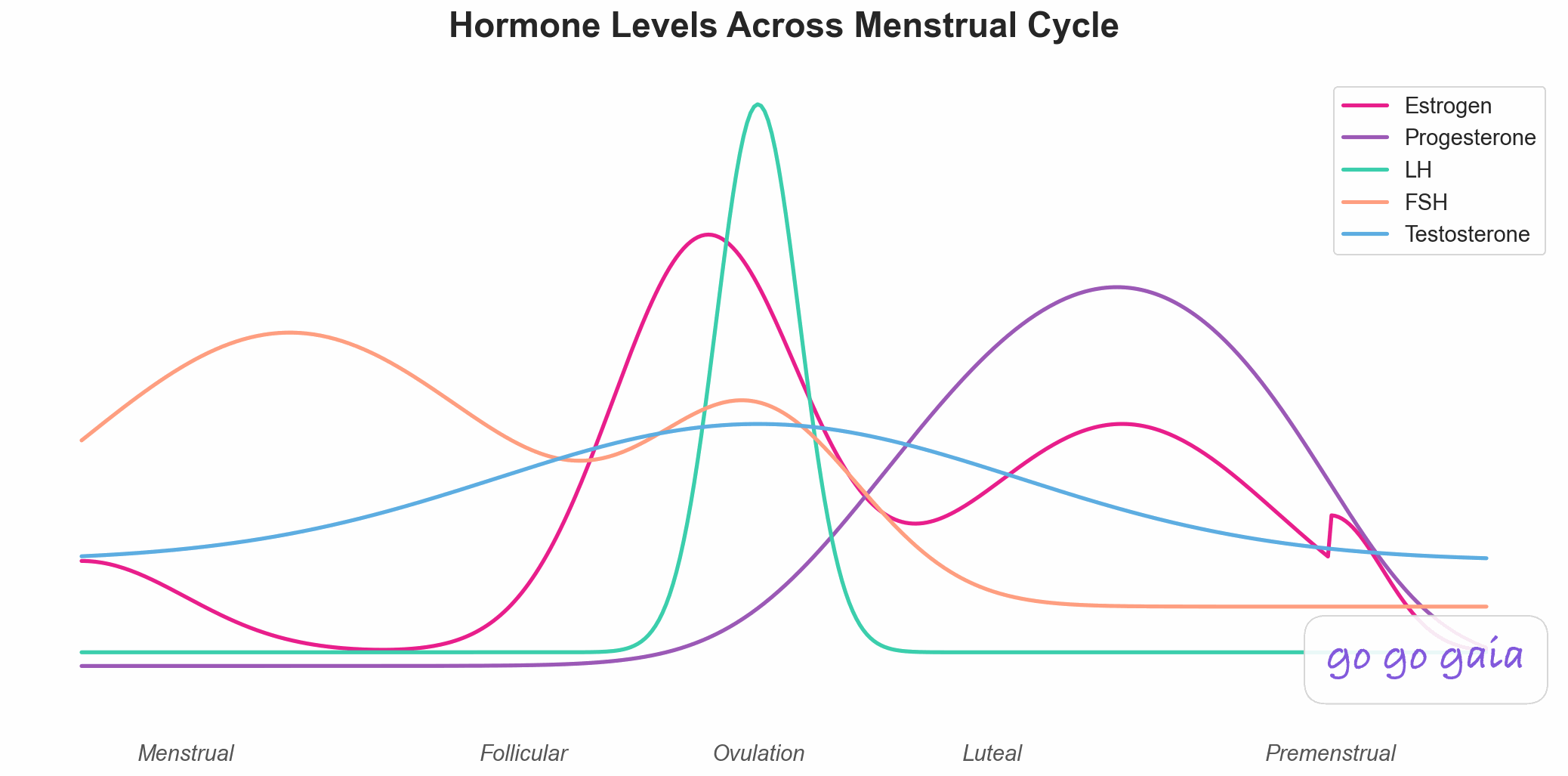
Apps estimate the fertile window around ovulation. Body-signal methods (LH, temperature) pin it down more accurately than calendar math.
Which Period Tracker App Should You Use?
There's no single most accurate app, because the right one depends on your goal and your cycle. A few starting points:
- New to tracking or just want cycle awareness? Start with our guide on how to choose a period tracker app.
- Trying to conceive? You'll want LH and temperature support. See the best fertility tracking apps.
- Irregular cycles or PCOS? Look for apps built for irregular cycles in our best PCOS tracking apps roundup.
- Perimenopausal? See the best perimenopause tracking apps for tools that handle missing and changing cycles.
- Weighing Flo against a lighter alternative? See Flo vs Stardust for how their prediction approaches and free tiers compare.
- Wondering if the free option on your phone is accurate enough? See Flo vs Apple Health Cycle Tracking for where the built-in predictions fall short.
- Comparing your options across three mainstream apps? See Flo vs Clue vs Stardust for how their prediction methods stack up side by side.
Accuracy comes from your data, not just the app
Predictions sharpen once an app has a few cycles of your real signals to learn from. The more you log (period, temperature, LH tests, symptoms), the closer it gets to your actual pattern.
Veya logs your cycle alongside temperature from your wearable, LH tests, and symptoms, so predictions are based on your body, not an average.
The Bottom Line
Period tracker apps are as accurate as the signals they're built on. Calendar-only prediction is a rough estimate, and it's roughest for irregular cycles. Apps that read body signals like temperature and LH are much more reliable, and any app improves once it has a few cycles of your data. Match the method to your goal, log consistently, and treat the prediction as a smart estimate rather than a guarantee.
Related Reading
- How to Choose the Best Period Tracker App
- Best Period Tracker for Irregular Cycles (2026)
- How to Tell If You're Ovulating (and Why Apps Disagree)
- Flo Alternatives 2026: 7 Period Trackers Compared
- Best Fertility Tracking App 2026
- Best PCOS Tracking App 2026
- Best Perimenopause Tracking App 2026
- Best Ovulation Tracker App 2026: 5 Apps Compared
- Flo vs Natural Cycles: Which One Should You Use?
- Best Birth Control & Pill Reminder App 2026: 6 Apps Compared
Give your app real signals to work with.
Calendar math can only estimate. Logging your temperature and LH tests for a few cycles is what turns a guess into a prediction based on your body.
Try Veya Free