Implantation Bleeding vs Period: How to Tell the Difference
You spotted a little blood a few days before your period was due, and now you're wondering: implantation, or just an early period? Here's how the two compare on color, timing, flow, and cramping, and why the bleeding alone can't give you a definite answer.
Educational content, not medical advice. For personal concerns, please consult your doctor.
Quick Answer: Implantation Bleeding or Period?
Implantation bleeding, when it happens, is light spotting or only a little blood around the time your period is due, much like a very light period.[1] A period is typically red at its heaviest and lasts about five days.[2] Bleeding alone can't confirm pregnancy. Most tests work from the first day of a missed period.[3]
We don't know of a reliable population figure for how often implantation bleeding happens, so treat any percentage you see online with caution. Not having it tells you nothing either way.
The few days before an expected period can turn into a guessing game, especially if you're trying to conceive. A bit of spotting shows up and your brain immediately asks the question. The good news is there are some real, observable differences. The honest news is that they point you in a direction rather than giving you a verdict.
How does implantation bleeding differ from a period?
Here's the comparison most people are looking for. Watch the bleeding over a day or two, not just the first moment you notice it, because the pattern tells you more than a single glance.
| Implantation bleeding | Your period | |
|---|---|---|
| Color | A little blood or spotting[1] | Red at its heaviest; pink or brown on lighter days[2] |
| Timing | Around the time your period is due[1] | At the end of your luteal phase, on your usual schedule |
| Flow | Spotting or only a little blood[1] | Usually heaviest in the first 2 days[2] |
| Duration | Usually brief | 2 to 7 days, usually about 5[2] |
| Cramping | Varies from person to person | Varies from person to person |
What is implantation bleeding?
If a fertilized egg implants in the lining of the uterus, it can sometimes cause a small amount of bleeding. The NHS lists it as an early sign of pregnancy: "a bleed similar to a very light period, with some spotting or only a little blood, around the time your period is due."[1] That timing is exactly why it gets confused for a period.
The key thing to know: not everyone who is pregnant notices spotting, so not having it tells you nothing. Plenty of people get a positive test with no spotting whatsoever.
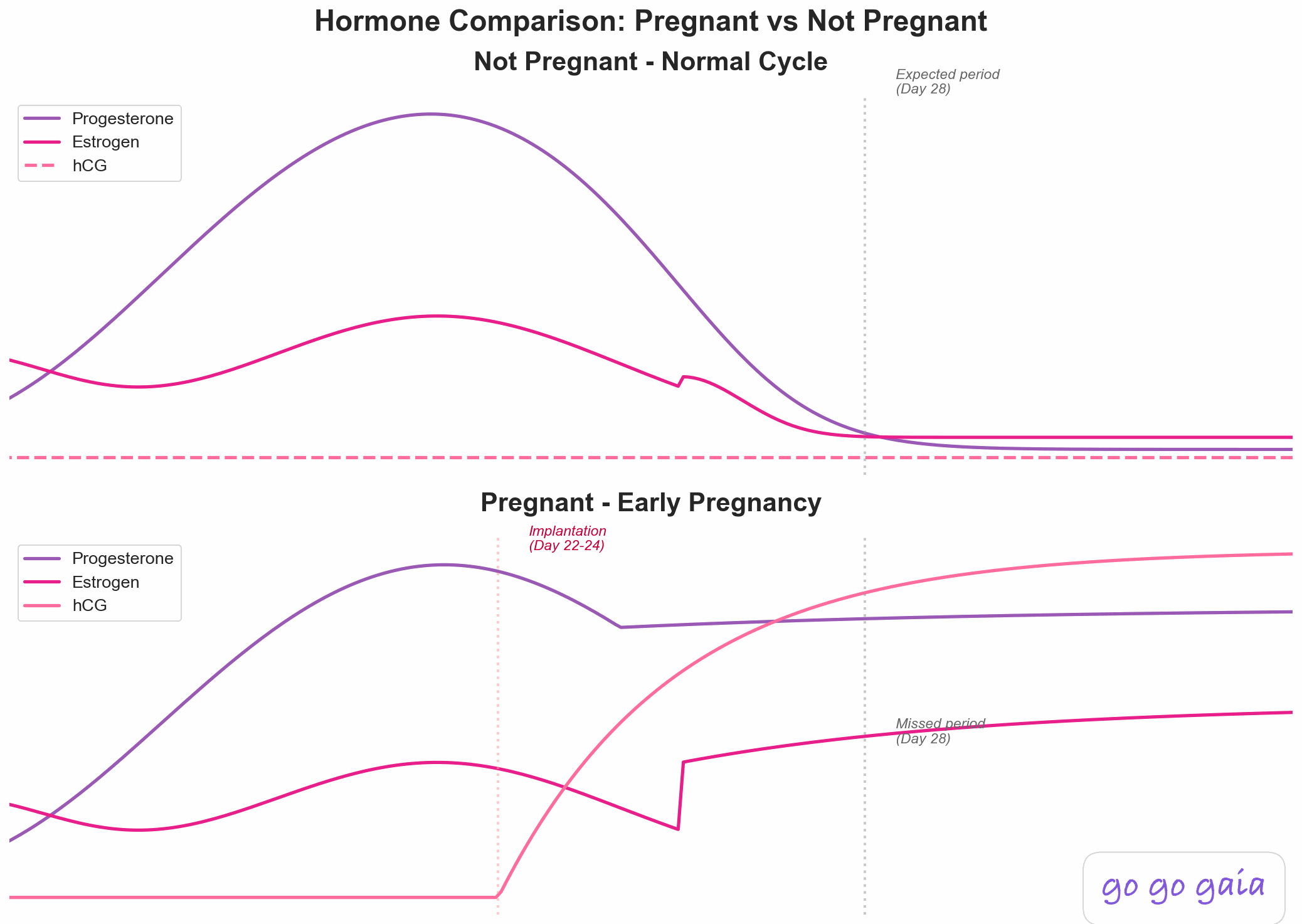
Early pregnancy and a coming period overlap because both ride high progesterone in the luteal phase. The bleeding pattern, and a test, are what separate them.
Can you tell from the bleeding alone?
Here's the part that's frustrating but important. The differences in the table are tendencies, not guarantees. A light, short, pinkish bleed could be implantation, or it could be a light period, or breakthrough spotting from another cause. People also experience their own cycles differently month to month.
So the bleeding can raise your suspicion, but it can't confirm anything. A pregnancy test is what gives you an answer. The NHS says you can carry out most pregnancy tests from the first day of a missed period, and that if you get a negative result and still think you're pregnant, you should wait a few days and try again.[3] For the full breakdown of early signs and test timing, see our guide on whether you might be pregnant and when to test.
How can tracking help you read spotting?
This is where knowing your own cycle pays off. If you've been logging, you have context that makes the spotting far less mysterious:
- You know when you ovulated, so you can tell whether spotting is landing in the window around when your period is simply due. If you're not sure how to pin down that date, our guide to how to tell if you're ovulating covers the signs, from LH strips to temperature, that mark the day.
- You know your usual period pattern, so a bleed that doesn't match your normal start is easier to notice.
- You can log the spotting itself, its color, amount, and how long it lasts, which is exactly the detail that helps you and a doctor make sense of it later.
If you're trying to conceive and want ovulation timing dialed in (which is what makes the implantation window meaningful), our comparison of the best fertility tracking apps and our guide to telling when you're ovulating both help.
Log the spotting while it's happening
Color, amount, and how long it lasts are the details you'll wish you'd written down. Logging your ovulation and any spotting through the two-week wait turns "wait, was that implantation?" into a clear record.
Veya tracks spotting and symptoms alongside your ovulation estimate, so the timing makes sense in context instead of in hindsight.
Track Your Two-Week WaitThe Bottom Line
Implantation bleeding is described as spotting or only a little blood, where a period is heaviest in its first couple of days. But its absence means nothing, and no amount of spotting analysis can replace a test. Watch what the bleeding does over a day or two, and if pregnancy is possible, take a test from the day your period is due. That's the only way to actually know.
Related Reading
Spotting makes more sense with context.
When you know your ovulation date and your usual pattern, a few drops of blood stops being a mystery. Track it and see.
Try Veya Free