PMS vs PMDD: How to Tell the Difference
Same timing, very different impact. If the week before your period feels less like "moody" and more like a different, harder version of you, here's how PMS and PMDD actually differ, and how doctors tell them apart.
Educational content, not medical advice. For personal concerns, please consult your doctor.
Quick Answer: PMS or PMDD?
PMS and PMDD follow the same timing, in the weeks before a period, so the difference is severity and impact. PMS is uncomfortable but usually manageable. PMDD is a much more intense form that can seriously affect everyday life. Keeping a symptom diary for at least two cycles shows your doctor the pattern. See also PMDD.
- PMS: a mix of physical and mood symptoms that are uncomfortable but manageable. You can still function.
- PMDD: severe mood symptoms (anger, hopelessness, anxiety, feeling out of control) that regularly disrupt work, relationships, or daily life. Estimated to affect 3 to 8% of women of reproductive age.[1]
- How it's confirmed: the NHS advises keeping a symptom diary for at least two menstrual cycles,[2] and the DSM-5 criteria call for prospective daily ratings across at least two symptomatic cycles.[4]
If you have ever wondered whether what you feel before your period is "normal PMS" or something more, you are asking the right question. The two get lumped together, but they are not the same thing, and the distinction matters because it changes what helps.
The short version: it is less about having a different set of symptoms and more about how severe they are and how much they take over your life. Let's break it down.
PMS vs PMDD at a Glance
Here's the side-by-side. Notice that the timing row is identical. That's the part that trips people up.
| PMS (Premenstrual Syndrome) | PMDD (Premenstrual Dysphoric Disorder) | |
|---|---|---|
| Timing | The weeks before your period[2] | Same: the luteal phase, before your period |
| Main symptom mix | Often physical (bloating, cramps, breast tenderness) plus mood shifts such as irritability or low mood[2] | Similar symptoms, much more intense, including feeling very anxious, angry or depressed[3] |
| Severity | Uncomfortable but you can still get through your day | Intense enough to derail your day |
| Impact on life | You notice it. Others often do not | It strains relationships and work. Others tend to notice |
| How common | Estimated global prevalence of about 48%[1] | Roughly 3 to 8% of women of reproductive age[1] |
| What charting shows | Symptoms cluster in the days before your period | A clear, repeating luteal pattern of severe mood symptoms, cycle after cycle |
| How it's diagnosed | A symptom diary across at least two cycles can show the pattern[2] | Prospective daily ratings during at least two symptomatic cycles[4] |
What is PMS?
PMS is the cluster of physical and emotional changes that show up in the luteal phase, the stretch between ovulation and your period. Bloating, sore breasts, cravings, fatigue, headaches, irritability, and mood dips are all common. The NHS describes PMS as the symptoms many women experience in the weeks before a period.[2] To see roughly when that window falls in your own cycle, our free PMS & luteal phase calculator estimates the days symptoms are most likely to start.
It's extremely common. One 2024 review estimates the global prevalence of PMS at 47.8%, with severe symptoms in 3 to 8%.[1] The NHS notes that most women have PMS at some point.[2] For a fuller breakdown of why it happens and what helps, see our guide to PMS symptoms and relief.
What is PMDD?
PMDD is a more severe form of PMS. The NHS describes it as much more intense, with a much greater negative impact on everyday life. Symptoms can include intense irritability or anger, hopelessness, anxiety, tearfulness, or a sense of being out of control, strong enough to interfere with work, relationships, and daily functioning.[3]
The symptoms still follow the cycle: they appear in the luteal phase, before your period. But the intensity is on a different level. PMDD is recognized as a distinct condition with formal diagnostic criteria.[4]
If the mood symptoms get dark
PMDD can bring severe depression or thoughts of self-harm in the days before a period. If that's happening to you, you don't have to wait it out alone. In the US you can call or text 988 anytime to reach the Suicide and Crisis Lifeline.
How do you tell PMS from PMDD if the symptoms overlap?
Here's the part most explanations skip. PMS and PMDD share a lot of the same symptoms. You can't separate them just by reading a list, because "irritable and tired before my period" describes both.
The deciding line is functional impact. Ask yourself: in the luteal phase, can you still do your job, hold your relationships together, and get through the day, even if you feel rough? With PMS, usually yes. With PMDD, the mood symptoms regularly knock those things off the rails.
The second deciding factor is the pattern over time. A single bad month doesn't point to either one. What matters is whether severe symptoms show up reliably in the luteal phase, cycle after cycle, and then clear when your period starts.
How does charting help tell PMS from PMDD?
Both of those deciding factors, impact and pattern, come from one thing: tracking your symptoms day by day across a few cycles. If you're ready to start, our PMDD tracker is built around exactly this kind of daily mood and symptom charting.
When you log mood and physical symptoms each day, and rate how much they get in the way, two things become visible that memory can't reliably give you:
- Whether symptoms are truly cyclical. A chart shows if your worst days land in the luteal phase and then lift, or if they're scattered across the whole month (which points somewhere else, like an anxiety or mood condition).
- How severe the impact really is. Daily severity ratings turn "I feel awful" into a record your doctor can read at a glance.
Since PMDD's impact often lands on relationships as much as work, some people also find it useful to share that same chart with a partner rather than re-explaining a hard week every month. Here's how different apps handle sharing cycle and symptom data with a partner.
Here's the cycle picture both conditions sit inside. Symptoms ramp up as hormones decline in the second half, then reset once bleeding begins:
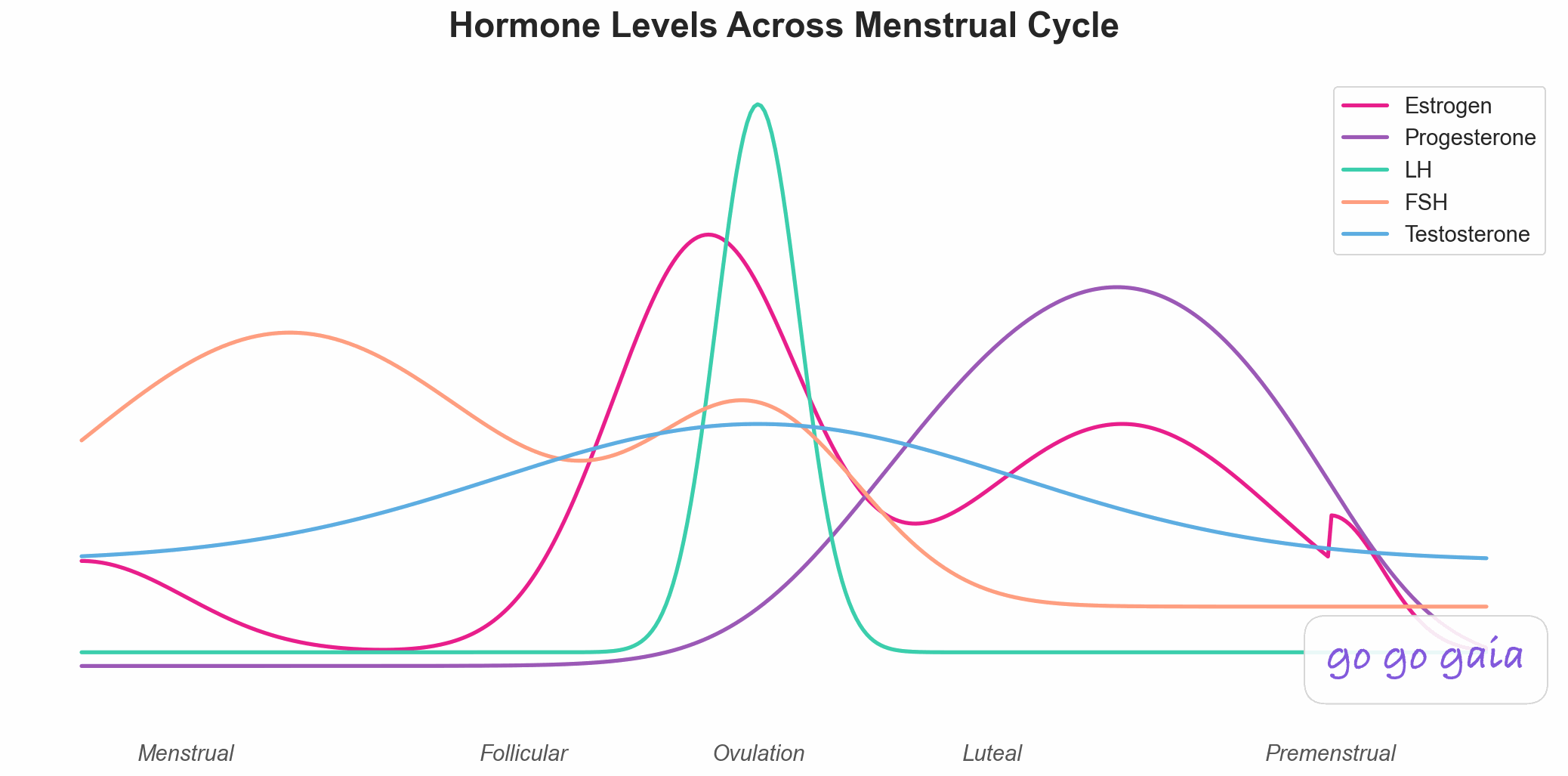
Both PMS and PMDD symptoms appear in the luteal phase (the second half) and ease once the period begins.
How PMDD Is Diagnosed
There's no blood test for PMDD. Diagnosis is built on prospective daily symptom charting over at least two consecutive cycles.[2][4] "Prospective" means you log as you go, not from memory afterward, because day-to-day records are far more accurate than looking back.
Your clinician uses that chart to confirm the symptoms are tied to your luteal phase, rule out other explanations, and decide on next steps with you. So the most useful thing you can do before an appointment is show up with the data already in hand, using a PMDD tracking app to keep the record daily instead of relying on memory.
Because the diagnosis lives or dies on that chart, the tool you track in matters. Our comparison of the best PMDD tracking apps walks through what each one handles well, including the app built specifically for charting PMDD.
The chart is the diagnosis
PMDD is confirmed with daily symptom ratings across at least two cycles.[2] That record is exactly what turns "I feel terrible before my period" into something your doctor can act on.
Veya logs mood, energy, and physical symptoms with one tap, and shows whether they cluster in your luteal phase. A few cycles of data makes the pattern easier to see.
Start a 2-Cycle Symptom ChartIs PMDD just depression?
People often ask whether PMDD is "just depression." It isn't, and the giveaway is timing. PMDD symptoms come and go with your cycle: bad in the luteal phase, better after your period, with a calmer stretch in between. Depression generally doesn't follow the cycle that way.
The two can also coexist, and some existing conditions flare premenstrually. That's exactly why charting against your cycle is so useful: it shows your clinician whether the pattern is cyclical or constant, which points to different care.
The Bottom Line
PMS and PMDD share timing and a lot of symptoms. What separates them is severity and how much they take over your life, plus whether that pattern repeats cycle after cycle. You can't settle it from a symptom list, and you don't have to guess. Track your symptoms for at least two cycles, look at the pattern, and bring it to a doctor. Whichever it turns out to be, you'll have something real to work from.
Related Reading
- Best PMDD Tracking App 2026: Apps Compared
- Why Is My PMS Different Every Month?
- Why Does My Mood Change With My Cycle?
- Luteal Phase Explained: Symptoms, Length & Why You Feel Awful
- Best Symptom Tracker App for Women 2026
- Tracking ADHD Symptoms Across Your Cycle: App Guide
- Track Anxiety With Your Cycle: 5 Apps Compared
- Period Tracking for Doctor Appointments: What to Log
Not sure which one it is? Chart it.
Two cycles of daily logging is enough to see whether your symptoms are cyclical and how much they really cost you. That's the data your doctor needs either way.
Try Veya Free